Pages

Showing posts with label technology. Show all posts

Scythe, Neal Shusterman

Friday, June 08, 2018

Neal Shusterman is one of my faves. I heard him speak at a reading conference a few years ago, and I appreciated how much he honors the intelligence of young people in his writing. His novels are full of action and excitement, but they also deal with big, challenging ideas that make the reader think and question. My favorite series of his is the Unwind Dystology, but I've liked almost everything I've ever read of his (sorry, Challenger Deep-I just didn't get you).

It says something about just how many YA books I currently have on my to-read shelf that it's taken me as long as it did to read Scythe, the first book in a new trilogy by Shusterman. The book is set in a future America where an artificial intelligence called the Thunderhead has benevolently taken over control of human society, solving all of the problems that plague mankind-poverty, crime, war, disease, even death-in the process. Because people can now reset themselves to younger ages, even be brought back from the dead (they call it "being deadish"), the population threatens to grow too large for available resources. That is where the Scythes come in. The only thing the Thunderhead does not control in this new world order are the Scythes, trained assassins who are required kill a certain number of people each month in an effort to keep the population under control. Scythes can choose to do this however they see fit, as long as they don't choose their victims based on biases, or spare victims because of personal connections. As you can imagine, Scythes are not exactly a welcome sight at your office picnic or kid's soccer game. Though they are revered for their necessary service to society, no one really wants to BE one. But that is exactly what Citra and Rowan have been selected for-to be apprenticed to a Scythe in hopes of earning the robes that will allow them to choose life or death for the people they meet. But, as they soon discover, there is a growing corruption in the order of the Scythes; there are Scythes who feel they should be freed from restrictions on who and how many people they can kill, Scythes who enjoy taking life so much they make a spectacle of it. Citra and Rowan must figure out how they can protect society from these immoral Scythes, or die trying.

Shusterman does a few unique things here with his worldbuilding. First, there is the whole premise of Scythes. I mean, people try to cheat death all the time, right? But what would the world be like if people really couldn't die? Would they stop getting married, having families, etc..? Probably not. The planet would be overrun in a generation. (This reminds me of Torchwood: Miracle Day, which had a similar storyline, though with a different cause). Also, not only didn't they die, but they can reset themselves back to a younger age to have a better quality of life. This appears to lead to some changes in the way people perceive relationships, both romantic and familial. Would people stay married to the same spouse for eternity, or would they eventually desire something different? How many children can a person have over centuries before they can't even remember all of them? How does the relationship change when suddenly your grandmother looks and feels younger than you do?

Most of the time when authors write stories about all-powerful AIs, they are trying to enslave humanity (think Skynet from the Terminator movies). Shusterman's Thundercloud, however, uses its power to save humanity. Of course, it takes over the functions of government to do so, and controls every aspect of daily life, but benevolently. Maybe Shusterman is setting us up for some big reveal about how the Thunderhead is actually using humans as slave labor for some larger purpose, but I don't think so. I think that Shusterman is presenting a version of the future where the technology we've created really does end up helping us instead of hurting us. That would be great, since technological advances are happening exponentially and there's no stopping them. I'd prefer the future where that's a good thing instead of a world-ending thing. This does beg the question of genre, though. I mean, ordinarily I'd say this is dystopian science fiction, but is it really dystopia if life is better after the computers take over?

The main characters Citra and Rowan are pretty well-developed, though I'm a little over the star-crossed-lovers thing in YA books in general. At least in this case the thing that makes them star-crossed is a little more unique than usual. I'm looking forward to seeing where Shusterman takes the story-a plot line that I assumed would take the whole trilogy to resolve was resolved by the end of the first book (and resolved well, not rushed nor through some deus ex machina shenanigans). Book 2, Thunderhead, arrived yesterday, and despite the many other books that have been on my to-read shelf longer, I may just have to dive right into it.

The Most Terrifying Book I've Read All Year...

Wednesday, May 07, 2014

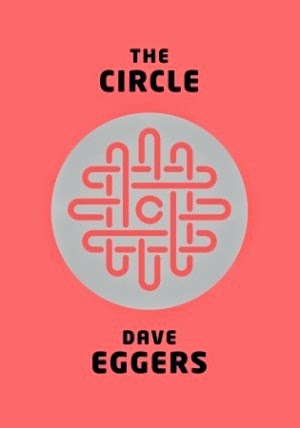
...is about a corporation.  That's right-not zombies or vampire or werewolves or serial killers.  The most frightening book I've read all year-in fact, in the last several years-is about a technology company.  Now, plenty of people are scared of technology, in the "I don't know how to work this" sort of way, but this fear goes right to the heart of so much of what is happening in our world right now regarding internet safety, social media, and privacy.  This particular nightmare is brought to us by Dave Eggers in his 2013 book, The Circle.

The titular Circle is the largest and most powerful corporation in the world.  Calling it a technology company
is a little like describing the Louvre as a building with some paintings on the walls.  The Circle has their fingers in everything.  Imagine if Mark Zuckerburg suddenly owned not just Facebook, but also Instagram, Ebay, Amazon, Twitter, and Google.  The Circle has access to every post, comment, like and dislike (which they call smiles and frowns), customer review, photograph, document, and piece of electronically collected health information in the world.  They also control most of the country's surveillance feeds, with an eye to attaining the information from every country in the world.  They built this empire one piece at a time, adding features and combining services with the aim of making things more safe, efficient and convenient-at least, that's their stated aim.  Their goal is something they call "completion"-that moment when every person on the planet is connected with every other person on the planet, and everyone on the planet knows what every other person in the planet is doing and thinking, all in real time.  (Scared yet?)

The main character is Mae Holland, a young woman in her 20s who at the start of the novel is working at the utility company of hometown.  Feeling discouraged, like her life essentially has no meaning, she is thrilled to be recruited by The Circle. After all, with their beautiful corporate campus, gobs of cash, and prestige, who wouldn't want to work for them.  She goes to work in their customer service department, and quickly begins working her way up through the ranks of the company.  Her friend Annie-a very important executive at The Circle-gives her a leg up whenever she can.  As she takes on more responsibilities, she is given more and more "screens".  She is expected to communicate with customers, answer/comment on people's posts and comments on The Circle's social media platforms (the Inner Circle and Outer Circle), answer endless survey questions designed to gauge consumer habits, and attend on-campus social events, all with the goal of increasing her participation rank, so that she can be given more responsibilities and more screens.  (How 'bout now?  Scared now?)

At one event, she meets a mysterious stranger named Kalder, who says he works for the company, but she can't find him in the staff directory, nor does she ever see him working on any projects.  She feels very drawn to him, but there is something about him that she senses just isn't right?  Is he a corporate spy?  Will she get in trouble for being seen with him?  Her life becomes less about her, and more about they ways in which she can help the company attain "completion".  When strange things start to happen to her friends, she is troubled, but is always able to push away her doubts-usually by what I would call hypnotizing herself by spending hours on social media, "smiling" and "frowning" and "zinging" (their equivalent to tweeting).

Essentially, what makes this book terrifying is the fact that it is not at all implausible.  This may technically be science fiction, in that the technologies that make The Circle's complete domination of every aspect of life have not all been developed yet, but they are all technologies that could exist.  It would not surprise me if there are companies around the world experimenting with some of the very same concepts that The Circle has perfected in this book.  And the arguments that The Circle used to infiltrate the private lives of every person, regardless of whether they use The Circle's social media or not, are ones that I can see swaying Americans now-in fact, they are arguments that do sway people now, arguments about curtailing civil liberties to "keep us safe" or to "expand human knowledge".

The most frightening part for me was the complete erosion of the separation of private and public spaces.  The masterminds behind The Circle were able to convince the world that everyone has the right to ALL knowledge-even things that people would traditionally keep private.  So not only can The Circle access the feeds from cameras placed all over the world, but so can everyone else.  In true Brave New World fashion, they come up with some slogans for what they believe, the most pertinent one for this conversation being Privacy Equals Theft.  People begin to feel that they have the right to know what everyone is thinking all of the time, because according to The Circle Secrets Equal Lies.  It creates a society where everyone is constantly reaching out to everyone else, but no real connections are made.  Personal communication and private relationships are replaced by smiles and frowns and comments on a newsfeed.  And what does The Circle get for all of this knowledge?  A way to monetize everything, a way to keep tabs on what people buy, who they spend time with, where they go...I sincerely hope that we NEVER end up living in the world of The Circle.
 
FREE BLOGGER TEMPLATE BY DESIGNER BLOGS